


Küresel iklim değişikliği tartışmalarında sıklıkla duyduğumuz “1.5°C sınırı” artık uzak bir gelecek senaryosu değil; verilerin bize gösterdiği somut bir takvim gerçeği.
Smart City & Partners olarak, gezegenin nabzını tutan global verileri ve yerel etkileri analiz ettik. NASA GDDP-CMIP6 veri setleri ve Copernicus projeksiyonları ışığında hazırladığımız çıktılar, sadece iklim bilimcileri değil; şehir plancılarını, enerji şirketlerini ve sigorta sektörünü yakından ilgilendiren kritik bir tabloyu ortaya koyuyor.
İşte verilerin bize anlattığı iki perdelik risk senaryosu: Küresel Alarm ve Yerel Gerçeklik.
Bölüm 1: Küresel Alarm Çalıyor (Mart 2029’a Dikkat)
Avrupa Orta Vadeli Hava Tahminleri Merkezi (ECMWF) ve Copernicus İklim Değişikliği Servisi verileri üzerinden yapılan projeksiyonlar, iklim tarihinde kritik bir dönemece girdiğimizi gösteriyor.
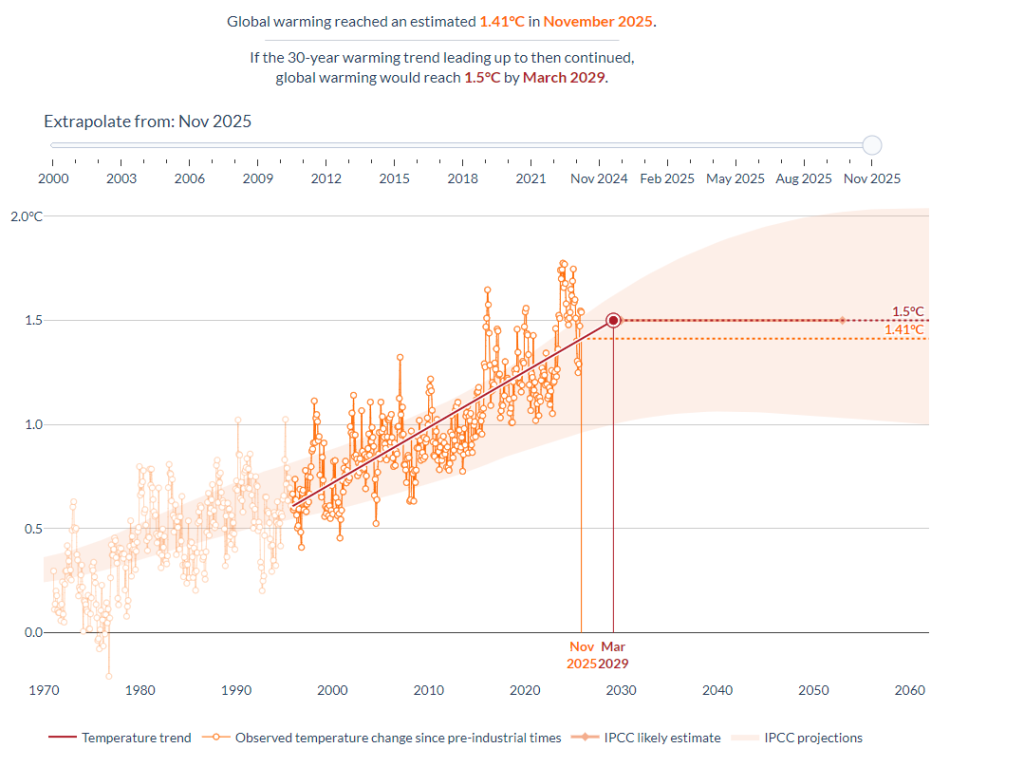
Kaynak: Copernicus Climate Data Store
Kasım 2025 itibarıyla küresel ısınma, sanayi öncesi döneme göre tahmini 1.41°C seviyesine ulaştı. Grafikteki trend çizgisi, mevcut 30 yıllık ısınma eğiliminin devam etmesi halinde, Paris Anlaşması’nın kritik eşiği olan 1.5°C sınırının Mart 2029 civarında aşılabileceğini işaret ediyor.
Bu sadece “havaların ısınması” değil; atmosferik dengelerin değişmesi, jet akımlarının bozulması ve ekstrem hava olaylarının “yeni normal” haline gelmesi demek. Peki, dünya genelindeki bu artış, Akdeniz havzasındaki Türkiye için ne anlama geliyor?
Bölüm 2: Türkiye İçin Kritik Senaryo: Yazları +2.75°C
Global ortalama 1.5°C artarken, bazı coğrafyalar “iklim değişikliği sıcak noktaları” (hotspots) olarak adlandırılır ve çok daha hızlı ısınır. Türkiye, ne yazık ki bu kuşağın tam merkezinde.
SCP Veri Analitiği ekibinin NASA GDDP-CMIP6 ham verilerini işleyerek oluşturduğu Türkiye projeksiyonları, durumu tüm çıplaklığıyla gözler önüne seriyor.
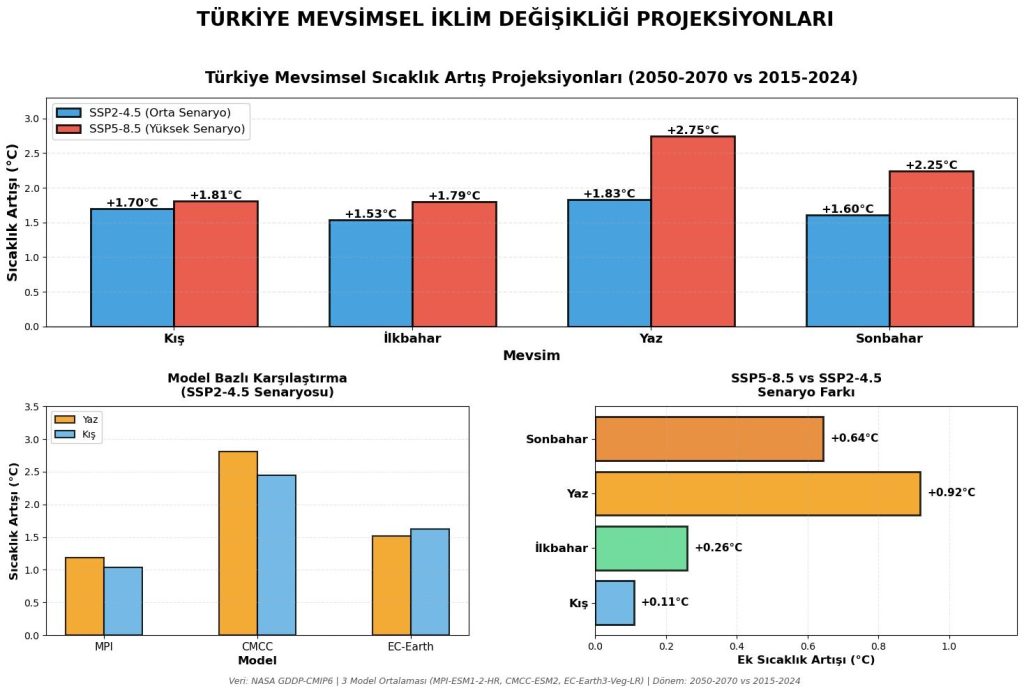
Analizimiz, referans dönem olarak aldığımız (ve halihazırda sıcak geçen) 2015-2024 yıllarına kıyasla, 2050-2070 döneminde bizi nelerin beklediğini gösteriyor:
- Yaz Mevsimi Alarm Veriyor: Yüksek emisyon senaryosunda (SSP5-8.5), yaz aylarında ortalama sıcaklıkların +2.75°C daha artması bekleniyor. Bu, şehir ısı adası etkisiyle birleştiğinde metropollerde dayanılmaz sıcaklıklar anlamına geliyor.
- Mevsimler Arası Makas Açılıyor: Kış aylarındaki artış (+1.81°C) ile yaz aylarındaki artış arasındaki fark, su döngüsünün ve tarımsal takvimin tamamen değişeceğinin habercisi.
Bu Veriler İş Dünyası ve Şehirler İçin Ne Anlama Geliyor?
Smart City & Partners olarak vizyonumuz, sadece sorunu tespit etmek değil; görünmeyeni görerek riskleri yönetilebilir hale getirmektir. +2.75°C’lik bir artış, altyapılarınız için şu riskleri beraberinde getiriyor:
1. Enerji Altyapısı ve Güvenliği
Sıcak hava dalgaları, enerji nakil hatlarında genleşmeye (sagging) ve verim kaybına yol açar. Aynı anda artan klima kullanımı, şebeke üzerinde devasa bir yük oluşturur.
- Çözümümüz: EyeOnBlue teknolojimiz ile enerji nakil hatlarını ve çevresindeki bitki örtüsü risklerini uydu ve İHA verileriyle izleyerek, kesinti ve yangın risklerini minimize ediyoruz.
2. Su Stresi ve Yönetimi
Yaz aylarındaki aşırı buharlaşma, baraj doluluk oranlarını kritik seviyelerin altına çekecektir. Su, artık sadece bir kaynak değil, stratejik bir varlık.
- Çözümümüz: Uydu tabanlı uzaktan algılama ile su rezervlerini, kalitesini ve havza bazlı kuraklık risklerini önceden modelliyoruz.
3. Afet Yönetimi ve Yangınlar
Kuruyan bitki örtüsü ve artan sıcaklık, orman yangınları için kusursuz bir fırtına yaratır.
- Çözümümüz: Yapay zeka destekli algoritmalarımız, bitki örtüsünün nem içeriğini ve yanıcılık riskini analiz ederek, müdahale ekiplerine proaktif veriler sunar.
Sonuç: Veriye Dayalı Adaptasyon
2029’da 1.5°C eşiğinin aşılması veya 2050’de Türkiye’nin yazlarının kavurucu hale gelmesi, bugünden alacağımız önlemlere bağlı olarak “yönetilebilir bir süreç” veya “bir kriz” olabilir.
Smart City & Partners olarak, uzaktan algılama ve yapay zeka çözümlerimizle geleceğin risklerini bugünden tahmin ediyor, işletmenizi ve şehrinizi iklim değişikliğine dirençli hale getiriyoruz.
Değişimi durduramayabiliriz, ancak ona hazırlıklı olabiliriz.

